Beauty and the Beast · France, 1740
The Beast asked a different question.
The version you know is a 1756 rewrite for schoolgirls. The original is a two-hundred-page novel, and it turns on Beauty saying yes herself.
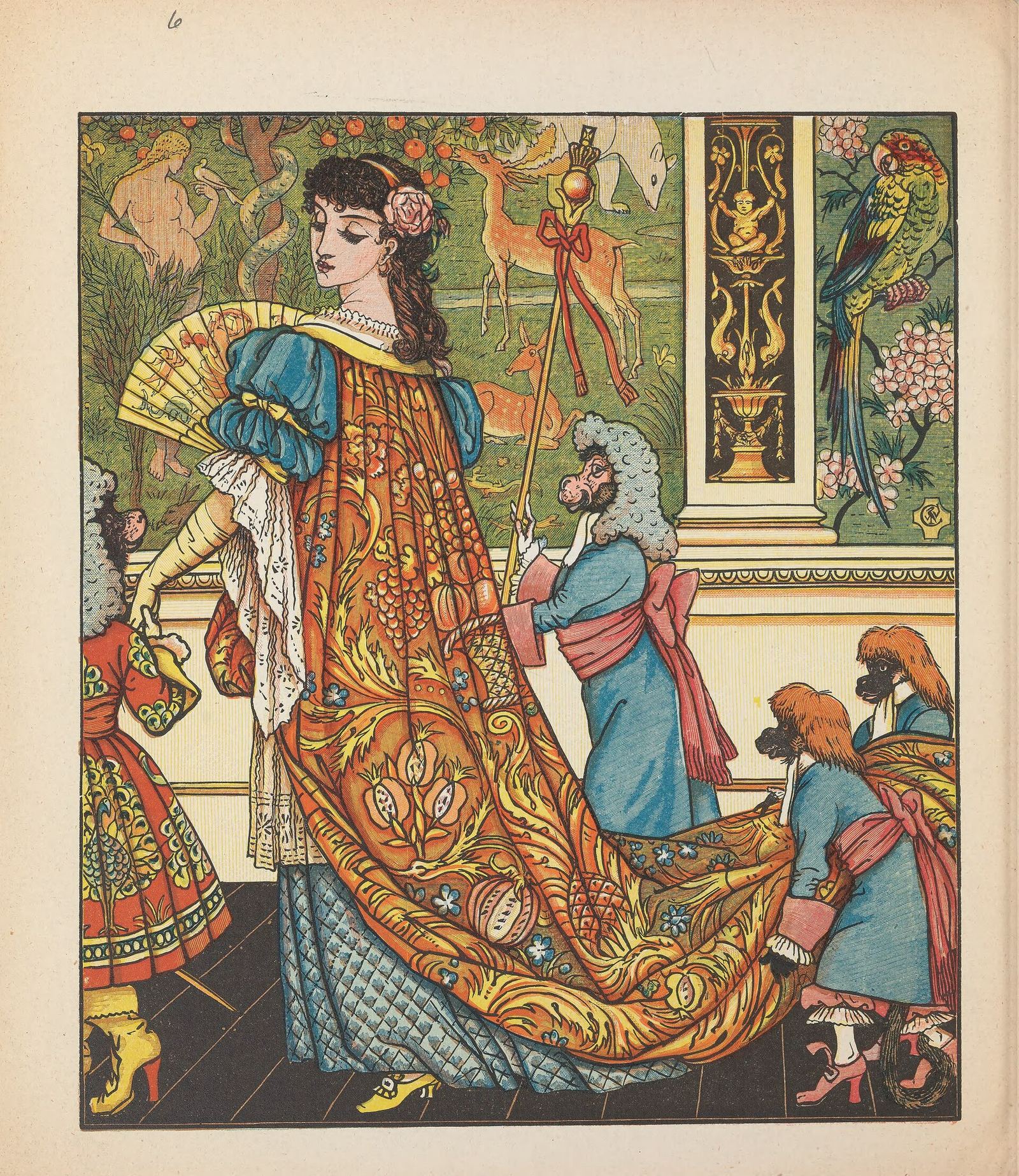
I
A novel, not a bedtime story
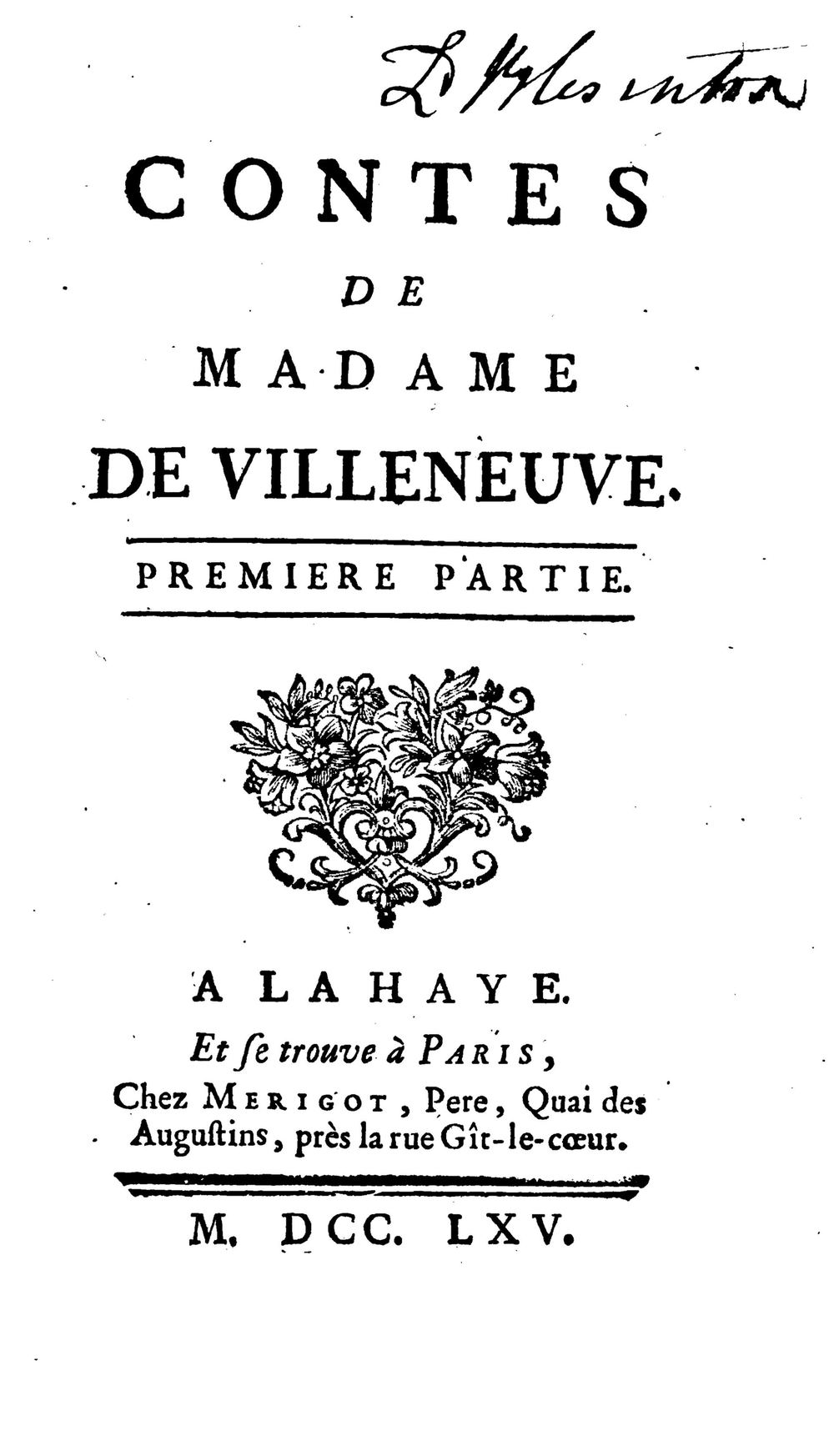
Beauty and the Beast is one of the few fairy tales with a named author and a date. Gabrielle-Suzanne Barbot de Villeneuve published it in 1740, in Paris, inside a longer book called La Jeune Américaine et les contes marins: a young woman is sailing to America, and her chambermaid passes the voyage by telling stories.1 The Beast's story is the first and by far the longest. In the collected edition of 1765, the one transcribed online today, it runs to nearly a hundred and twenty pages.2
That length matters. Villeneuve's tale is not a fable with a moral. It has a dream lover, a war between fairies, a hidden royal parentage, and a second half most retellings throw away. The parts everyone remembers, the rose, the palace, the beast at dinner, are the first third.
II
What he actually asks
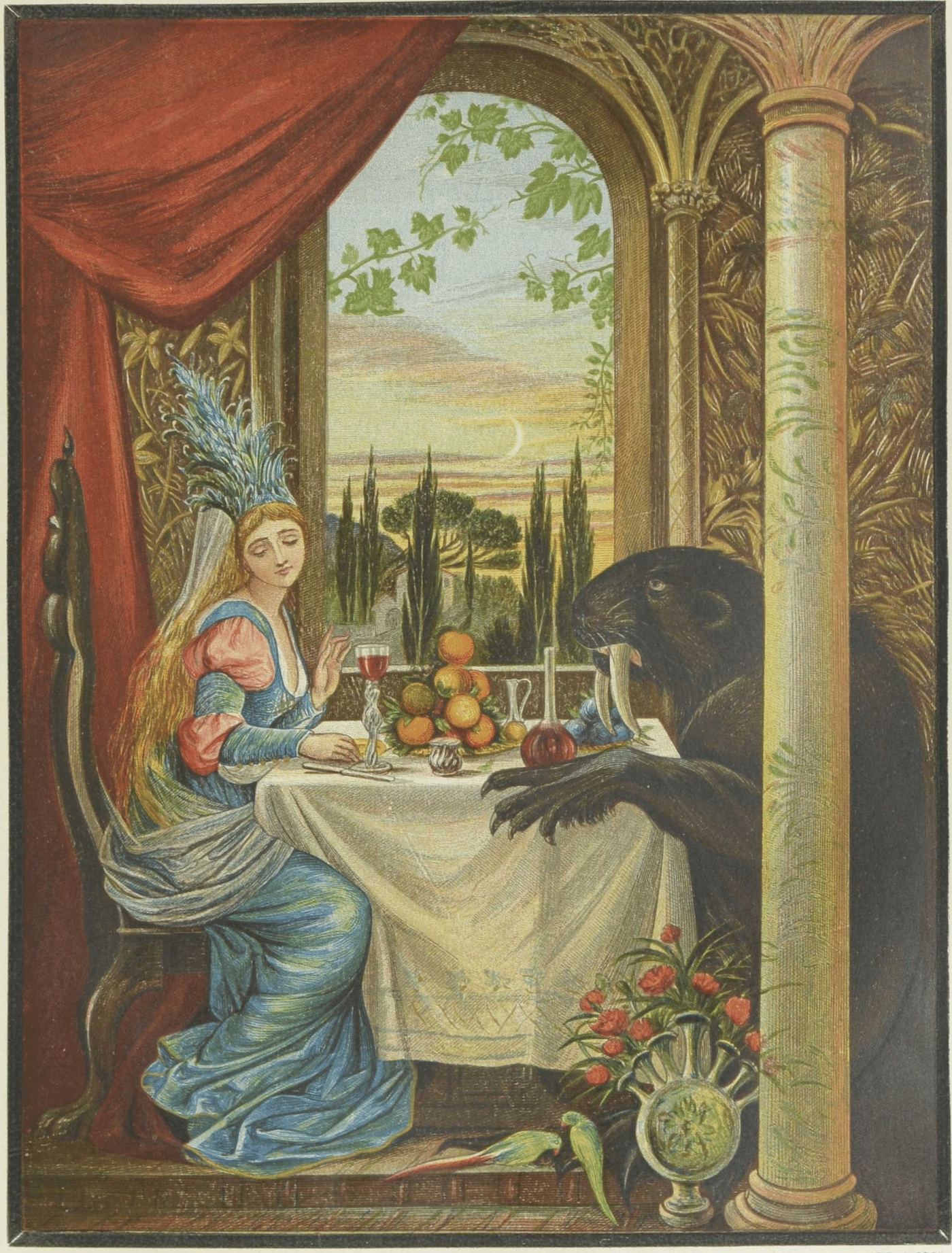
In the version you know, the Beast asks Beauty every night whether she will be his wife. In Villeneuve's text the question is blunter, and Beauty tells us so herself. Alone in the palace, she reasons through her situation:
La demande qu'il me fait à chaque fois, si je veux coucher avec lui, me prouve qu'il persiste toujours en son amour … quoiqu'il ne s'obstine pas dans ses demandes, & qu'il ne témoigne aucun ressentiment de mes refus.
"The question he puts to me every time, whether I will sleep with him, proves he still persists in his love … though he does not press his demands, and shows no resentment at my refusals."3
Read that again for what it says about the Beast. He asks. She refuses. He leaves. He does not argue, does not punish, does not sulk. The next night he asks again. Months of this. The prince later admits the words were not even his: the fairy who cursed him scripted the question, and he protested that no girl could naturally accept it.4
III
The curse can only be broken by her
Here is the part that decides what kind of story this is. The prince is turned into a beast by a fairy he refused. Her terms for undoing it are precise:
d'attendre dans cet état, pour reprendre ta première forme, qu'une fille, belle & jeune vienne volontairement te trouver, quoiqu'elle soit persuadée que tu la doive dévorer. Il faut aussi … qu'elle prenne une assez tendre affection pour te proposer de t'épouser.
"To wait in this state, until a girl, beautiful and young, comes to you of her own free will, though convinced you will devour her. It is also needed that she grow fond enough of you to propose marriage to you herself."5
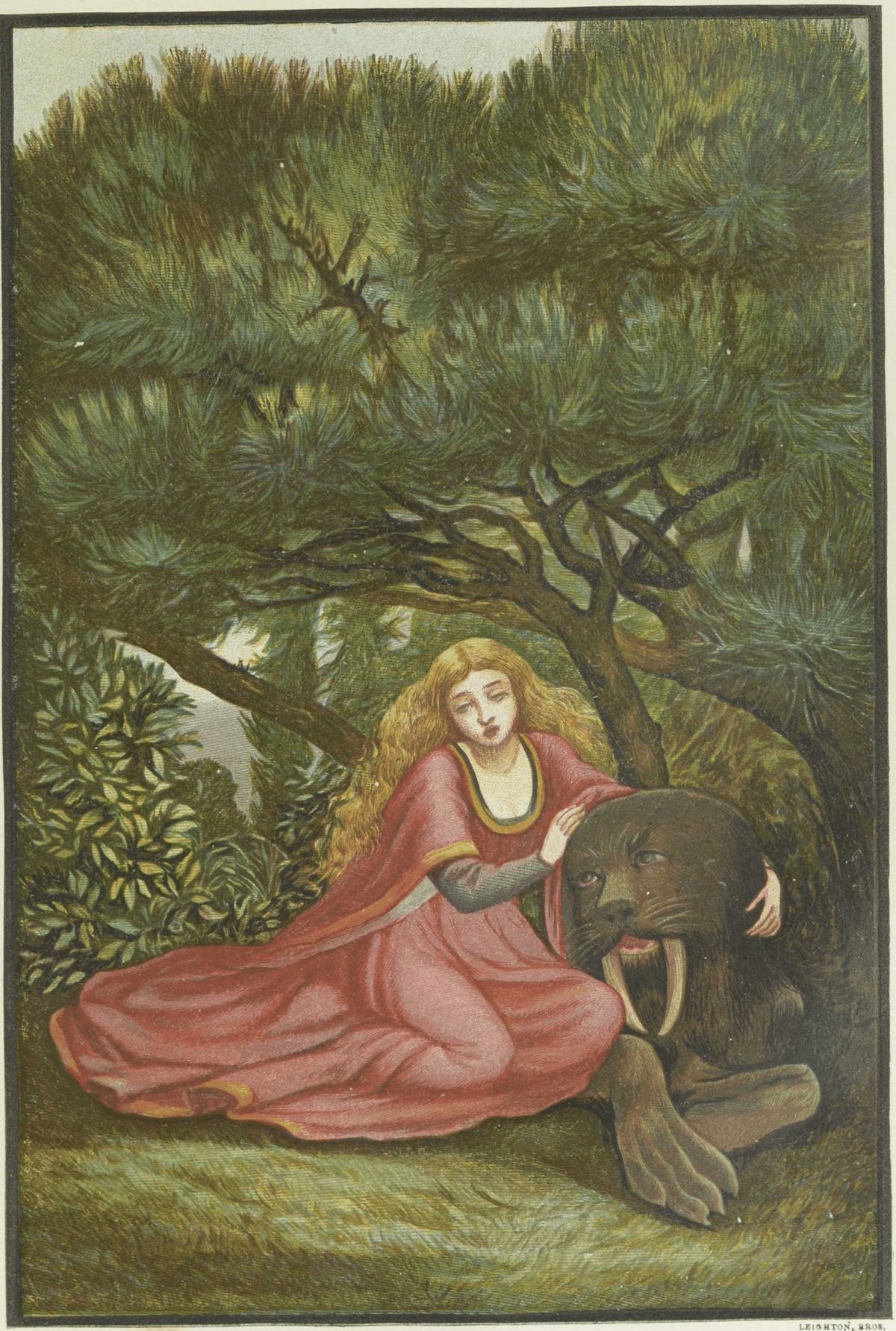
Of her own free will. Propose marriage herself. The entire machinery of the tale runs on Beauty's consent. Nothing the Beast does can end the curse; only something she chooses to do. And when it happens, it happens as vows, spoken in both directions:
Oui, la Bête, je le veux bien, pourvu que vous me donniez votre foi, & que vous receviez la mienne. Je vous la donne, reprit la Bête … Et moi, répliqua la Belle, je vous reçois pour mon époux, & vous jure un amour tendre & fidèle.
"Yes, Beast, I am willing, provided you give me your troth and receive mine. I give it, replied the Beast … And I, said Beauty, receive you as my husband, and swear you a tender and faithful love."6
There is a forced marriage in this story. It is not Beauty's. In the second half the prince tells his own history. The fairy who raised him from infancy demanded that he marry her, "not as a mother but as a lover." He refused: she was old, he said, and he did not want to bind himself so young. She cursed him on the spot.7 The one person in the tale pushed toward marriage by someone older and more powerful, and punished for saying no, is the Beast.
IV
The governess who rewrote it
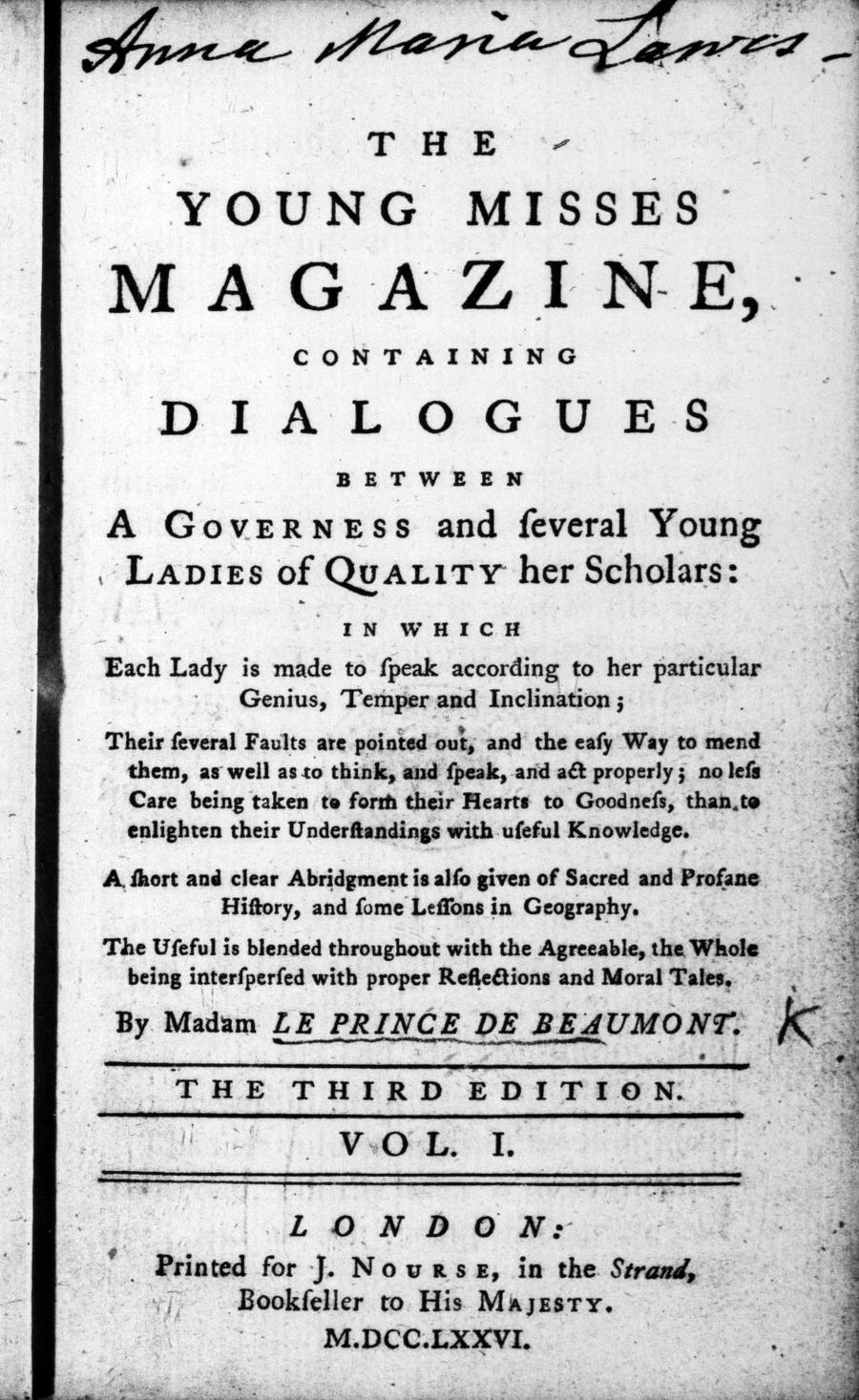
Sixteen years later, in London, a French governess named Jeanne-Marie Leprince de Beaumont cut Villeneuve's novel down to a few pages and put it in a schoolbook. Her title page says exactly who it was for. In her own English edition: Dialogues between a Governess and several Young Ladies of Quality her Scholars.8 The book even lists the pupils by name and age: Lady Sensible, twelve; Lady Witty, twelve; Lady Mary, five.9
This is the Beauty and the Beast almost everyone has read, and it is the one Disney adapted. Beaumont kept the rose, the palace, the dinners, and the dying Beast. She changed the question. In her text he asks, every night, "La Belle, voulez-vous être ma femme?" Beauty, will you be my wife?10 The palace library greets Beauty with words written in gold: wish, command, here you are queen and mistress.
Beaumont's preface explains what she thought stories were for. Children who read Bluebeard, she writes, learn "the drawbacks of a marriage made for money," and also "the misfortunes that can come from having little indulgence for a husband's whims."11 The novelist Marina Warner hears in Beaumont's tale "the anxious tones of a well-meaning teacher raising her pupils to face their future obediently."12 That is a fair reading of Beaumont. It was never true of Villeneuve, whose Beauty is nobody's pupil.
V
So, Stockholm syndrome?
You will hear that Beauty and the Beast is the original case of Stockholm syndrome. The term is from 1973: the Swedish criminologist Nils Bejerot coined it after a bank robbery in Stockholm in which hostages were held for six days.13 It has never been a medical diagnosis. And when a reporter put the question to Frank Ochberg, the psychiatrist who developed the idea for hostage negotiators, he said the case against was stronger than the case for: the syndrome needs a captor who terrorizes, and a captive who believes she is going to die.14 Villeneuve's Beast asks a question and accepts no. That is a different story, and an older one.
Notes
-
Gabrielle-Suzanne Barbot de Villeneuve, "La Belle et la Bête," in Contes de Madame de Villeneuve, vol. 1 (Paris: Merigot père, 1765), 45–163, French Wikisource, https://fr.wikisource.org/wiki/Contes_de_Madame_de_Villeneuve/La_Belle_et_la_B%C3%AAte. First published in La Jeune Américaine et les contes marins (1740). ↩
-
D. L. Ashliman, ed., "Beauty and the Beast," Folktexts, University of Pittsburgh, https://sites.pitt.edu/~dash/beauty.html, identifies La Jeune Ameriquaine et les Contes Marins (1740) as the first printing. The Bibliothèque nationale's scan of the 1740 edition could not be opened for this article; the 1765 text is used throughout. ↩
-
Villeneuve, "La Belle et la Bête," Beauty's reflection during her stay at the palace. Translations from the French are the author's. ↩
-
Villeneuve, "La Belle et la Bête," the prince's narration: "En vain je lui représentai qu'il n'étoit pas naturel que vous acceptassiez la proposition de coucher avec moi." ↩
-
Villeneuve, "La Belle et la Bête," the fairy's terms as recounted by the prince. ↩
-
Villeneuve, "La Belle et la Bête," the exchange of vows. ↩
-
Villeneuve, "La Belle et la Bête," the prince's narration: "il falloit que je l'épousasse; qu'elle ne vouloit pas être aimée de moi comme une mère, mais comme une amante," and "La Fée vieille, laide, & d'un caractère hautain … Je ne voulois pas d'ailleurs m'engager dans un âge si peu avancé." ↩
-
Jeanne-Marie Leprince de Beaumont, The Young Misses Magazine, Containing Dialogues between a Governess and Several Young Ladies of Quality Her Scholars, 3rd ed., vol. 1 (London: J. Nourse, 1776), title page, Internet Archive, https://archive.org/details/bim_eighteenth-century_the-young-misses-magazin_leprince-de-beaumont-ma_1776_1. The French original: Magasin des enfans, ou Dialogues entre une sage gouvernante et plusieurs de ses élèves de la première distinction, vol. 1 (London: J. Haberkorn, 1756), https://archive.org/details/bim_eighteenth-century_magasin-des-enfans-ou-d_leprince-de-beaumont-ma_1756_1. ↩
-
Leprince de Beaumont, The Young Misses Magazine (1776), "Names of the Ladies who appear in the Dialogues of these Volumes," unpaginated leaf before Dialogue I. ↩
-
Jeanne-Marie Leprince de Beaumont, "La Belle et la Bête," in Contes moraux pour l'instruction de la jeunesse (Paris: Barba, 1806), 1–32, French Wikisource, https://fr.wikisource.org/wiki/Contes_moraux_pour_l%E2%80%99instruction_de_la_jeunesse/La_Belle_et_la_B%C3%AAte: "La Belle, voulez-vous être ma femme?" and "Souhaitez, commandez; vous êtes ici la reine et la maîtresse." English in Ashliman, from The Young Misses Magazine, 4th ed., vol. 1 (London: C. Nourse, 1783), 45–67. ↩
-
Jeanne-Marie Leprince de Beaumont, "Avertissement," in Le Magasin des enfans, vol. 1 (Paris: Billois, 1801), 4–5, Internet Archive, https://archive.org/details/lemagasindesenf00beaugoog: "Je trouve moyen de faire comprendre aux enfans, lorsqu'ils lisent la Barbe-bleue, les inconvéniens d'un mariage fait par intérêt, les dangers de la curiosité, les malheurs qui peuvent arriver du peu de complaisance que l'on a pour les caprices d'un époux." The same preface appears in the 1756 edition, whose scan is too poor to quote. ↩
-
Marina Warner, "Beauty and the Beast," Sight and Sound, October 1991, republished by the British Film Institute, 7 May 2021, https://www.bfi.org.uk/sight-and-sound/features/beauty-beast-belle-bete-marina-warner. ↩
-
Nils Bejerot, "The Six Day War in Stockholm," New Scientist 61, no. 886 (1974): 486–87. ↩
-
Frank Ochberg, quoted in "Does Belle from 'Beauty and the Beast' Suffer from Stockholm Syndrome? We Asked an Expert," Yahoo Entertainment, March 2017, https://www.yahoo.com/entertainment/does-belle-from-beauty-and-the-beast-suffer-from-stockholm-syndrome-we-asked-an-expert-175449990.html. ↩
Bibliography
Ashliman, D. L., ed. "Beauty and the Beast." Folktexts, University of Pittsburgh. https://sites.pitt.edu/~dash/beauty.html.
Bejerot, Nils. "The Six Day War in Stockholm." New Scientist 61, no. 886 (1974): 486–87.
Leprince de Beaumont, Jeanne-Marie. "Avertissement." In Le Magasin des enfans, vol. 1, 4–5. Paris: Billois, 1801. Internet Archive.
Leprince de Beaumont, Jeanne-Marie. "La Belle et la Bête." In Contes moraux pour l'instruction de la jeunesse, 1–32. Paris: Barba, 1806. French Wikisource.
Leprince de Beaumont, Jeanne-Marie. Magasin des enfans, ou Dialogues entre une sage gouvernante et plusieurs de ses élèves de la première distinction. Vol. 1. London: J. Haberkorn, 1756. Internet Archive.
Leprince de Beaumont, Jeanne-Marie. The Young Misses Magazine, Containing Dialogues between a Governess and Several Young Ladies of Quality Her Scholars. 3rd ed. Vol. 1. London: J. Nourse, 1776. Internet Archive.
Ochberg, Frank. Quoted in "Does Belle from 'Beauty and the Beast' Suffer from Stockholm Syndrome? We Asked an Expert." Yahoo Entertainment, March 2017.
Villeneuve, Gabrielle-Suzanne Barbot de. "La Belle et la Bête." In Contes de Madame de Villeneuve, vol. 1, 45–163. Paris: Merigot père, 1765. First published in La Jeune Américaine et les contes marins, 1740. French Wikisource.
Warner, Marina. "Beauty and the Beast." Sight and Sound, October 1991. Republished by the British Film Institute, 7 May 2021.
Named but not consulted
Hearne, Betsy. Beauty and the Beast: Visions and Revisions of an Old Tale. Chicago: University of Chicago Press, 1989. The standard book on the tale's history; not available for this article, so nothing here is drawn from it.
Image credits
Walter Crane, Beauty and the Beast (London: George Routledge & Sons, 1874), colour woodblock prints. Wikimedia Commons. Public domain.
Title page, Contes de Madame de Villeneuve, vol. 1, 1765. Bibliothèque nationale de France via Wikimedia Commons. Public domain.
Eleanor Vere Boyle, Beauty and the Beast: An Old Tale New-Told, with Pictures (London: Sampson Low, 1875). Wikimedia Commons. Public domain.
Title page, Leprince de Beaumont, The Young Misses Magazine, 3rd ed., London, 1776. Internet Archive. Public domain.
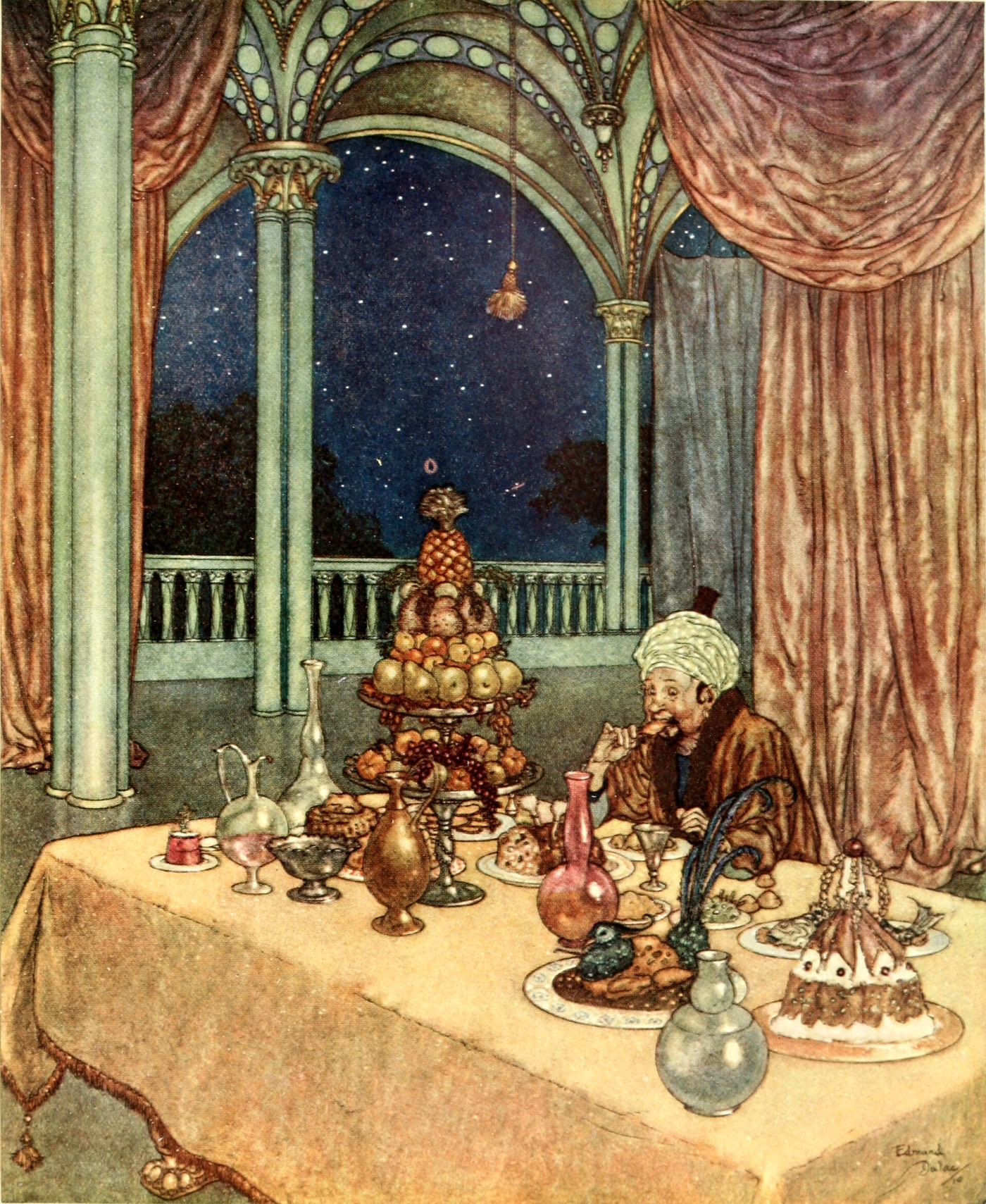
Edmund Dulac, colour plate in Arthur Quiller-Couch, The Sleeping Beauty and Other Fairy Tales (London: Hodder & Stoughton, 1910). Wikimedia Commons. Public domain.