Chang'e · China, 2nd century BCE
Chang'e's fortune was good. She became a toad.
The oldest surviving Chang'e story has no loneliness and no warning in it: the divination she casts before flying to the moon comes back auspicious, and the earliest text to follow her there turns her into an amphibian.
I
The oldest Chang'e is a footnote in an argument about drainage
The Huainanzi, compiled at the court of Liu An in the second century BCE, is the earliest surviving text with the story in it. The whole thing is one sentence long, and it is not a story. It is a comparison inside a passage about standing water:
潦水不泄,瀇瀁極望,旬月不雨則涸而枯澤,受瀷而無源者。譬若羿請不死之藥於西王母,姮娥竊以奔月,悵然有喪,無以續之。何則?不知不死之藥所由生也。
"Floodwater that does not drain spreads as far as the eye can see, but if it does not rain for a month it dries to a dead marsh, because it takes in runoff and has no spring of its own. It is like this: Yi asked the Queen Mother of the West for the drug of no-death, and Heng'e stole it and fled to the moon. He was dismayed at the loss, and there was no way to get more. Why? Because he did not know where the drug of no-death comes from."1
Read it twice. The moral is about not knowing a thing's source. Nobody in it is lonely. Nobody is warned about vanity. The drug is 不死之藥, the drug of no-death, not a youth serum; the text never mentions aging, beauty, or a face.1 Yi's own commentator, quoted by Li Shan in the Wenxuan, adds exactly one fact: 常娥,羿妻也, "Chang'e was Yi's wife."4
II
The omen was good, and then she became a toad
The first text that actually follows her to the moon is the Lingxian by Zhang Heng, the second-century astronomer. It survives only as quotations. In the fuller version she does something the modern retelling always skips: she checks.
羿請無死之藥於西王母,姮娥竊之以奔月。將往,枚筮之於有黃,有黃占之曰:「吉。翩翩歸妹,獨將西行,逢天晦芒,毋驚毋恐,後其大昌。」姮娥遂託身于月,是爲蟾蠩。
"Yi asked the Queen Mother of the West for the drug of no-death, and Heng'e stole it and fled to the moon. Before going, she had it divined by Youhuang. Youhuang read the stalks and said: 'Auspicious. Fluttering, the returning sister, alone she will travel west. She will meet darkness and haze. Do not be startled, do not be afraid. Afterward there will be great flourishing.' Heng'e then lodged her body in the moon, and became the toad."2
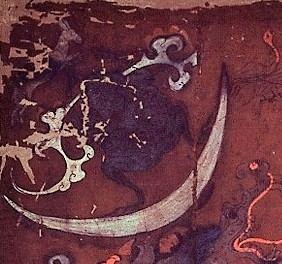
吉. Auspicious. 後其大昌, great flourishing afterward. That is a forecast of success, not a devastating cost. And the payoff is 蟾蠩, a toad, the blotch people saw on the moon's face. The Taiping yulan preserves the same passage in a shorter form and names her plainly: 羿妻姮娥, "Yi's wife Heng'e," 是為蟾蜍, "and became the toad."3 Whatever the early story is punishing or promising, it is not beauty.
III
The loneliness arrives in the ninth century, in twenty-eight characters
The version everyone actually feels is a Tang poem. Li Shangyin, quatrain, collected in the Quan Tangshi under the title 常娥:
雲母屏風燭影深,長河漸落曉星沈。常娥應悔偷靈藥,碧海青天夜夜心。
"Deep shadow of the candle on the mica screen. The River of Heaven sinking, the dawn star going down. Chang'e must regret that she stole the magic drug: green sea, blue sky, and her heart, night after night."5
應悔, "must regret," is a guess the poet makes about her, roughly a thousand years after the Huainanzi. The regret is Li Shangyin's, projected. It is the best line anyone ever wrote about her, and it is not the original.
IV
Mid-Autumn, in 1147, has no Chang'e in it
Meng Yuanlao's Dongjing meng hua lu, written in 1147 as a memory of the lost Song capital, gives the Mid-Autumn entry in full. Here is the night:
中秋夜,貴家結飾臺榭,民間爭占酒樓玩月。絲篁鼎沸,近內庭居民,夜深遙聞笙竽之聲,宛若雲外。閭里兒童,連宵嬉戲。夜市駢闐,至於通曉。
"On Mid-Autumn night the great houses dressed their terraces, and ordinary people fought for places in the wine towers to play with the moon. Strings and pipes boiled over. The children of the lanes played all night. The night market was packed until daybreak."6
New wine, crabs, pomegranates, chestnuts, noise. The words 嫦娥, 姮娥, 常娥, 月餅 (mooncake), 玉兔, and 拜月 do not appear anywhere in that chapter.6 So a sentence like "the Mid-Autumn legend carried a subtle warning" is running a moral backward into a festival that, in the best Song description we have, was a party.
V
The filter part is the reading, not the text
One part of the modern reading stands on real evidence, just not on Chinese evidence. A 2026 scoping review of 58 studies on appearance-focused social media found that "appearance-focused engagement was consistently linked to body dissatisfaction, body surveillance, drive for thinness, and negative affect," and describes "repeated exposure to curated and digitally edited depictions of slender female bodies" as the mechanism by which the standard gets internalized.7 That is documented. The bridge from that to a Han-dynasty simile about a drying marsh is the student's own reading, and it is worth more when it is labeled as one.
Not verified, and therefore not claimed
The common explanation that 姮娥 became 嫦娥 to avoid the personal name of Emperor Wen of Han (劉恆) is widely repeated. Searches of Wikisource for a primary text stating that substitution returned no usable attestation, so this page does not assert it. What is directly verified is the orthographic fact: the texts fetched here read 姮娥 or 常娥, never 嫦娥.12345
Gao You's 高誘 commentary to the Huainanzi was not fetched in a standalone edition. It is cited here only as quoted by Li Shan in the Wenxuan.4
The Metropolitan Museum of Art's own object page for accession 1981.4.2 returned HTTP 429 and was not read; the attribution below comes from the Wikimedia Commons file record.
Notes
-
Liu An 劉安, comp., Huainanzi 淮南子, "Lanming xun" 覽冥訓, Wikisource 維基文庫, accessed September 16, 2026, https://zh.wikisource.org/wiki/淮南子/覽冥訓. The passage reads: 「潦水不泄,瀇瀁極望,旬月不雨則涸而枯澤,受瀷而無源者。譬若羿請不死之藥於西王母,姮娥竊以奔月,悵然有喪,無以續之。何則?不知不死之藥所由生也。」 Note that 譬若 ("it is like") marks the Chang'e sentence as a simile for the preceding image of sourceless water. ↩↩↩
-
Zhang Heng 張衡, Lingxian 靈憲, Wikisource 維基文庫, accessed September 16, 2026, https://zh.wikisource.org/wiki/靈憲. The passage reads: 「羿請無死之藥於西王母,姮娥竊之以奔月。將往,枚筮之於有黃,有黃占之曰:「吉。翩翩歸妹,獨將西行,逢天晦芒,毋驚毋恐,後其大昌。」姮娥遂託身于月,是爲蟾蠩。」 The Lingxian does not survive as an independent book; this is a reconstructed text assembled from quotations. ↩↩
-
Li Fang 李昉 et al., comps., Taiping yulan 太平御覽, juan 4, "Tian bu si" 天部四, Wikisource 維基文庫, accessed September 16, 2026, https://zh.wikisource.org/wiki/太平御覽/0004. The entry reads: 「張衡《靈憲》曰:羿請不死藥於西王母,羿妻姮娥竊以奔月,托身於月,是為蟾蜍。」 This shorter quotation is the independent attestation that the toad belongs to the Lingxian, and it names her explicitly as Yi's wife. ↩↩
-
Xiao Tong 蕭統, comp., Zhaoming Wenxuan 昭明文選, juan 13, with Li Shan 李善 commentary, Wikisource 維基文庫, accessed September 16, 2026, https://zh.wikisource.org/wiki/昭明文選/卷13. Li Shan's note to Xie Zhuang's "Yue fu" quotes: 「淮南子曰:羿請不死之藥於西王母,常娥竊而奔月。注曰:常娥,羿妻也。歸藏曰:昔常娥以不死之藥奔月。」 The "注" is the standard Han commentary attributed to Gao You 高誘; it supplies only the marriage, not the toad. Note that the name here is written 常娥. ↩↩↩
-
Li Shangyin 李商隱, "Chang'e" 常娥, in Quan Tangshi 全唐詩, juan 540, Wikisource 維基文庫, accessed September 16, 2026, https://zh.wikisource.org/wiki/全唐詩/卷540. The poem reads: 「雲母屏風燭影深,長河漸落曉星沈。常娥應悔偷靈藥,碧海青天夜夜心。」 The Quan Tangshi gives the title and the name as 常娥, not 嫦娥. ↩↩
-
Meng Yuanlao 孟元老, Dongjing meng hua lu 東京夢華錄, juan 8, "Zhongqiu" 中秋, Wikisource 維基文庫, accessed September 16, 2026, https://zh.wikisource.org/wiki/東京夢華錄/卷八. The complete Mid-Autumn entry is quoted in section IV above; a string search of the chapter returns no occurrence of 嫦娥, 姮娥, 常娥, 月餅, 玉兔, 拜月, or 蟾. ↩↩
-
Giuseppe Marano, Senad Hasaj, Oksana Di Giacomi, Marco Lanzetta, Gabriele Sani, and Marianna Mazza, "Bodies on Display: A Scoping Review of Appearance-Focused Social Media, Body Image, Self-Esteem, and Psychological Wellbeing in Adolescent Girls and Young Women," European Journal of Investigation in Health, Psychology and Education 16, no. 8 (2026): 108, https://doi.org/10.3390/ejihpe16080108, https://pmc.ncbi.nlm.nih.gov/articles/PMC13512515/. The review covers 58 studies. Quoted: "Appearance-focused engagement was consistently linked to body dissatisfaction, body surveillance, drive for thinness, and negative affect, with appearance comparison, internalization of appearance ideals, and self-objectification emerging as recurrent explanatory mechanisms," and "Through repeated exposure to curated and digitally edited depictions of slender female bodies on social networking platforms, adolescent girls and young women come to endorse these standards as personal benchmarks against which their own bodies are evaluated." The review does not isolate augmented-reality beauty filters as a separate variable, so it supports the general pattern and not a filter-specific effect size. ↩
Bibliography
Li Fang 李昉 et al., comps. Taiping yulan 太平御覽. Juan 4, "Tian bu si" 天部四. Wikisource. https://zh.wikisource.org/wiki/太平御覽/0004.
Li Shangyin 李商隱. "Chang'e" 常娥. In Quan Tangshi 全唐詩, juan 540. Wikisource. https://zh.wikisource.org/wiki/全唐詩/卷540.
Liu An 劉安, comp. Huainanzi 淮南子. "Lanming xun" 覽冥訓. Wikisource. https://zh.wikisource.org/wiki/淮南子/覽冥訓.
Marano, Giuseppe, Senad Hasaj, Oksana Di Giacomi, Marco Lanzetta, Gabriele Sani, and Marianna Mazza. "Bodies on Display: A Scoping Review of Appearance-Focused Social Media, Body Image, Self-Esteem, and Psychological Wellbeing in Adolescent Girls and Young Women." European Journal of Investigation in Health, Psychology and Education 16, no. 8 (2026): 108. https://doi.org/10.3390/ejihpe16080108.
Meng Yuanlao 孟元老. Dongjing meng hua lu 東京夢華錄. Juan 8. Wikisource. https://zh.wikisource.org/wiki/東京夢華錄/卷八.
Xiao Tong 蕭統, comp. Zhaoming Wenxuan 昭明文選. Juan 13, with Li Shan 李善 commentary. Wikisource. https://zh.wikisource.org/wiki/昭明文選/卷13.
Zhang Heng 張衡. Lingxian 靈憲. Wikisource. https://zh.wikisource.org/wiki/靈憲.
Named but not consulted
Chinese Text Project (ctext.org). Requested for the Huainanzi and the Taiping yulan; every request returned a security interstitial or an empty body, so nothing from ctext.org is cited on this page. All Chinese texts above were read on zh.wikisource.org instead.
Gao You 高誘. Huainan honglie jie 淮南鴻烈解. The standalone commentary edition was not fetched; see the note above.
Hou Han shu 後漢書, juan 100, with Liu Zhao 劉昭 commentary. A Wikisource search shows it carries the Lingxian passage, but the page itself was not opened; the Taiping yulan was used for the second attestation instead.
Metropolitan Museum of Art. Object page for accession 1981.4.2. HTTP 429, not read.
Dove Self-Esteem Project. Annual reports were not fetched and are not cited.
Pew Research Center. Reports on teens and social media were not fetched and are not cited.
Image credits
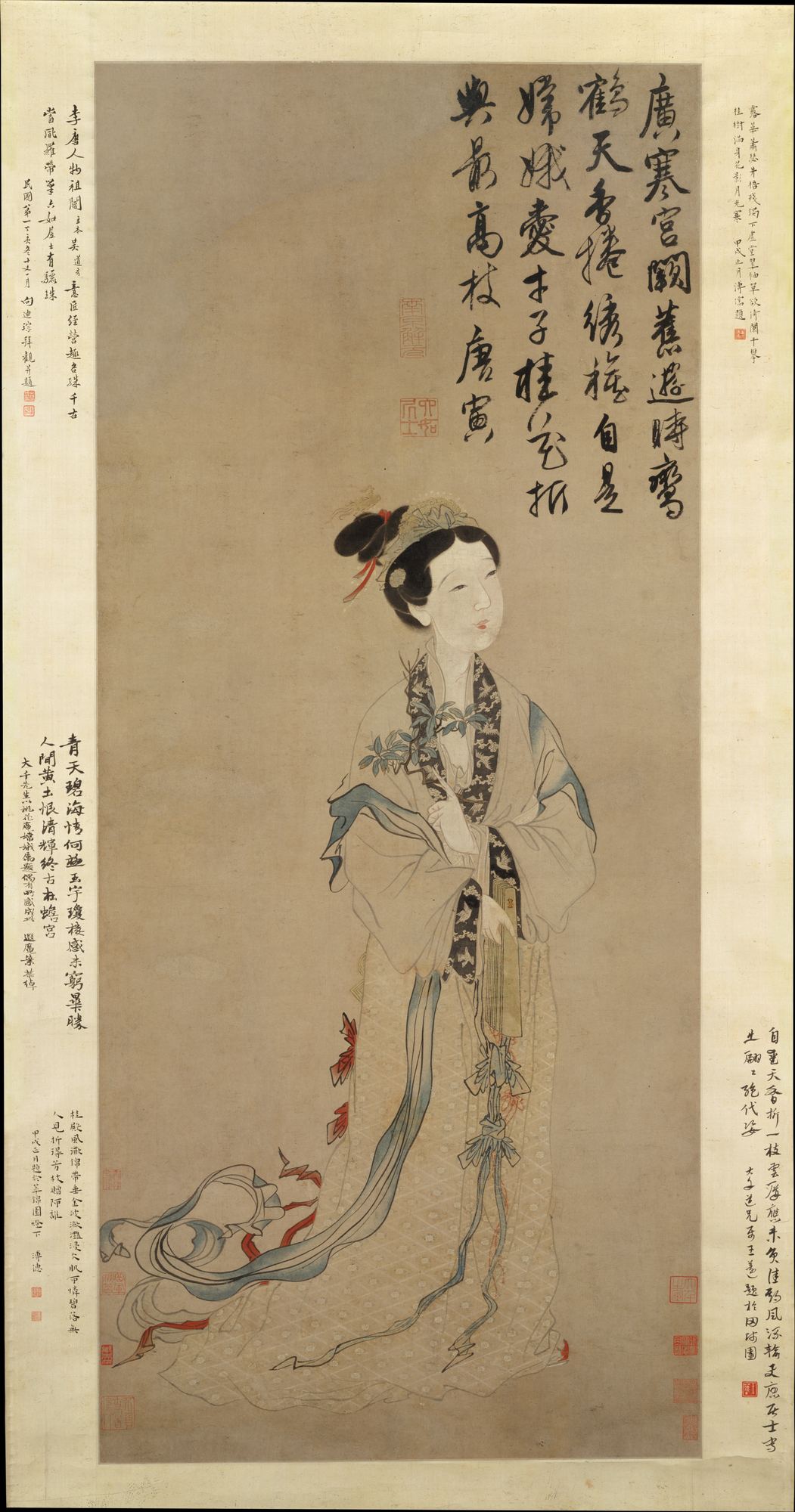
The Moon Goddess Chang E, Ming dynasty (1368 to 1644), after Tang Yin. Metropolitan Museum of Art. Public domain.
Moon and toad, detail of the silk banner from Mawangdui tomb no. 1, Changsha, c. 168 BCE. Hunan Museum via Wikimedia Commons. Public domain.
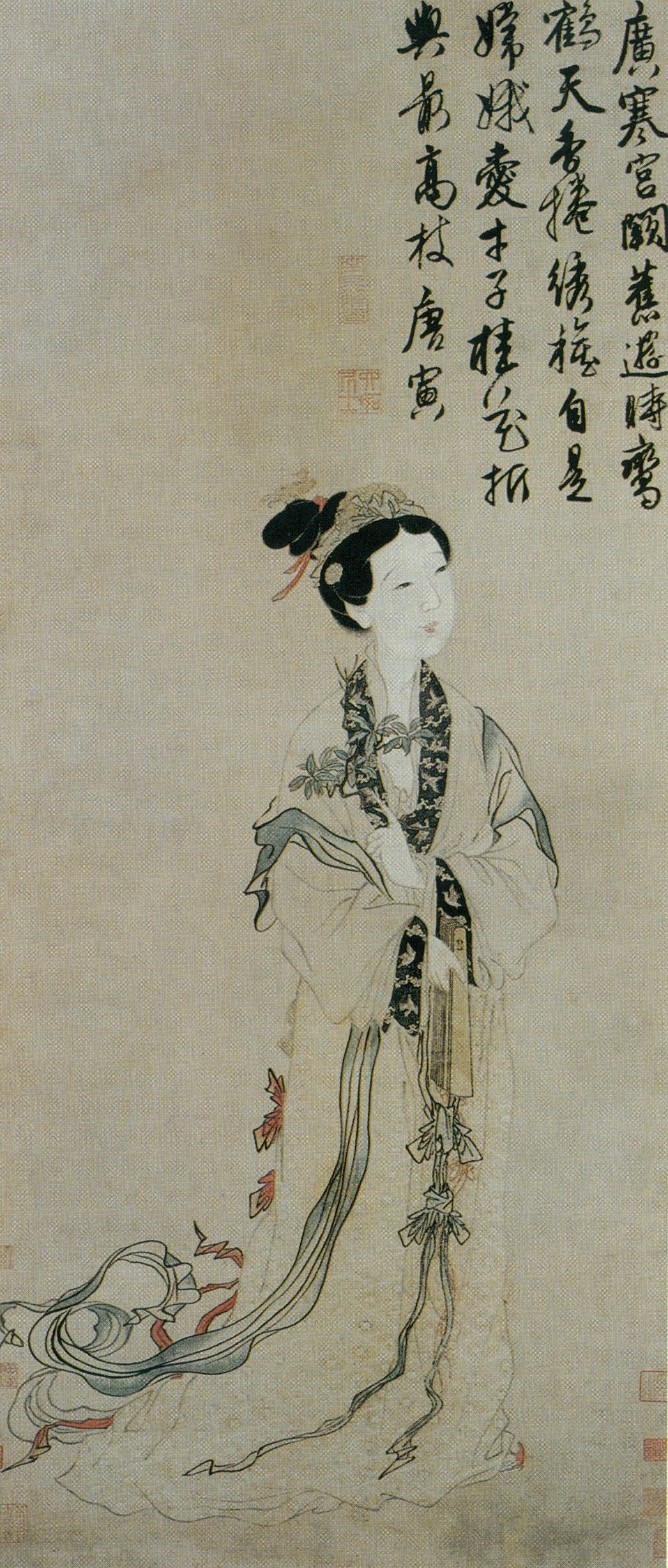
Tang Yin, Chang'e Holding a Cassia Branch, c. 1510. Public domain.