The Little Mermaid · Denmark, 1837
The sea witch cut out her tongue, not her voice
Andersen's 1837 text is harsher than the retellings in one place and far stranger in another, because it does not end with her dying.
I
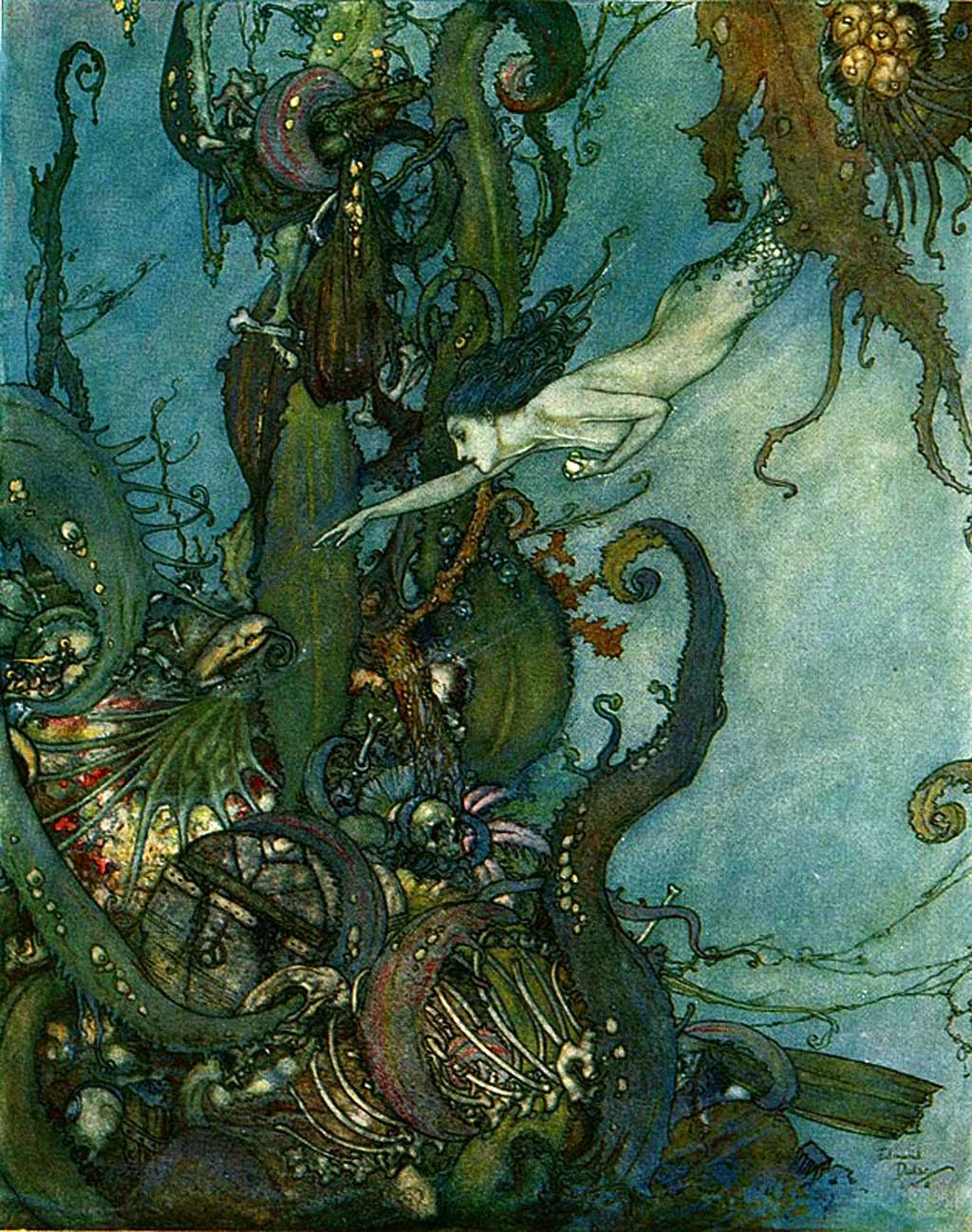
What the witch actually promises
The tale was printed in Copenhagen on 7 April 1837, in the third booklet of Eventyr, fortalte for Børn, published together with "The Emperor's New Clothes."1 The bargain scene is the part everyone quotes, and the wording is worth having exactly. The witch describes the drink first:
Jeg skal lave dig en Drik ... da skilles din Hale ad og snerper ind til hvad Menneskene kalde nydelige Been, men det gjør ondt, det er som det skarpe Sværd gik igjennem dig. "I shall make you a drink ... your tail will part and shrink into what humans call pretty legs, but it hurts, it is as if a sharp sword went through you." (literal rendering)2
Hersholt's English translation, hosted by the H. C. Andersen Centre, gives this as "it will feel as if a sharp sword slashed through you."3 Then comes the sentence every retelling is built on:
du beholder din svævende Gang, ingen Dandserinde kan svæve som du, men hvert Skridt du gjør, er som om du traadte paa en skarp Kniv, saa dit Blod maatte flyde. "every step you take will feel as if you were treading upon knife blades so sharp that blood must flow."2 3
Knives, yes. Glass, no. The Danish word Glas appears in the tale for the clearness of the water, for a glass bell of sky, for the glass walls of the ballroom, and nowhere in the passage about her feet.2 The "broken glass" of the retellings is an addition.
II
The price is a tongue
Here the retellings are softer than Andersen, not harsher. The witch does not take a voice in the abstract. She takes the organ:
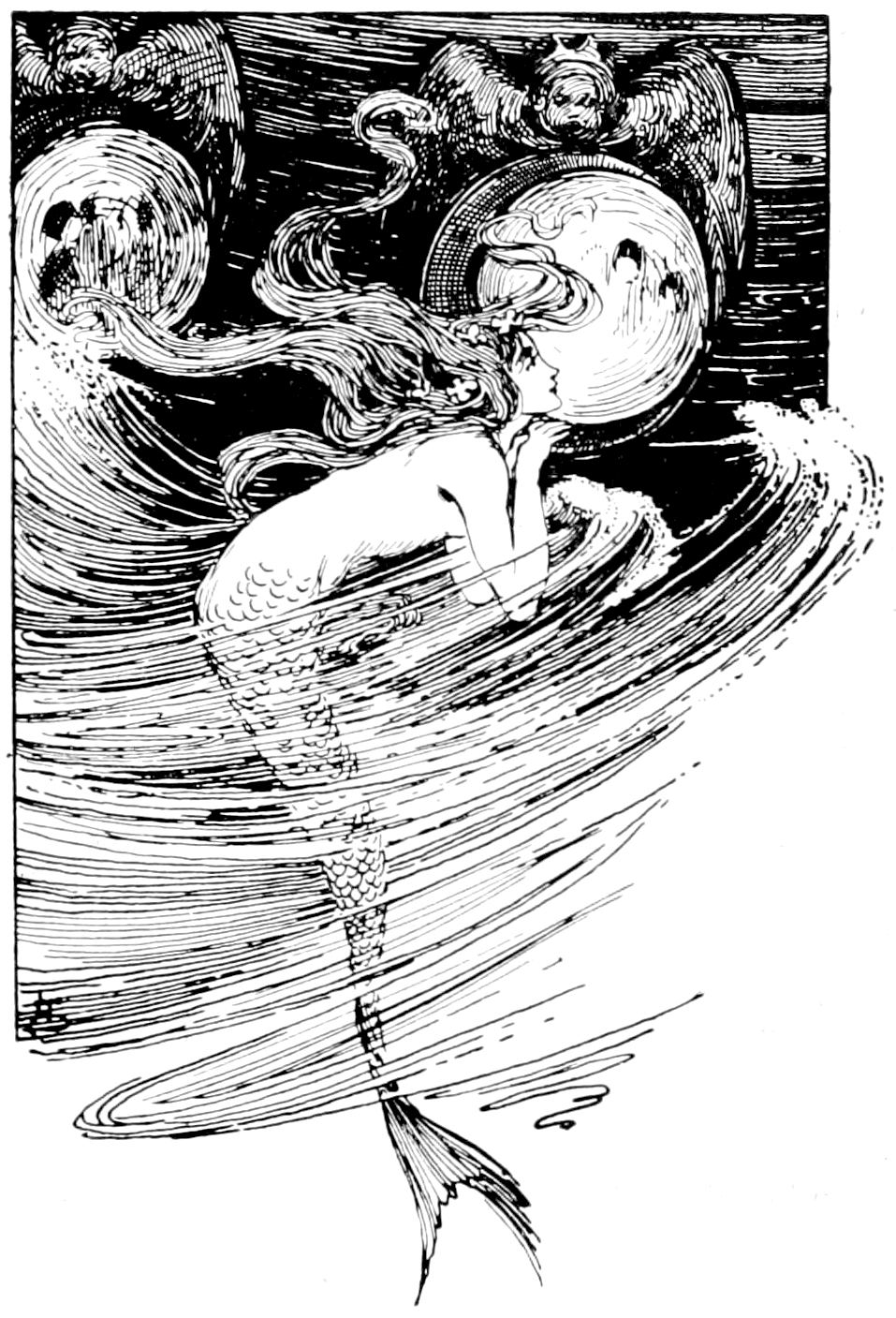
"Der har du den!" sagde Hexen og skar Tungen af den lille Havfrue, som nu var stum, kunde hverken synge eller tale. "And she cut off the tongue of the little mermaid, who now was dumb and could neither sing nor talk."2 4
The drink is made with the witch's own blood so that it will be sharp "as a two-edged sword," and when the mermaid swallows it she faints and lies as if dead.2 Then she walks, and the text returns to the promise and keeps it: every step felt "as though she trod on pointed awls and sharp knives," and she bore it gladly.2
III
The foam clause, word for word
The condition everyone remembers is real, and the original states it as a contract with a deadline:
den første Morgen efter at han er gift med en anden, da maa dit Hjerte briste, og du bliver Skum paa Vandet. "If he marries someone else, your heart will break on the very next morning, and you will become foam of the sea."2 5
But read the clause that comes just before it in the same speech. The witch says that if she does not win the prince's love, da faaer du ingen udødelig Sjæl, "then you will get no immortal soul."2 The foam is the penalty. The soul is the prize. The retellings keep the penalty and drop the prize, and that single cut is what turns the tale into a breakup story.
IV
The knife her sisters bring
The retellings end with "she lost the prince anyway." The text does not end there. Her sisters sell their hair to the witch and surface with an offer:
Hun har givet os en Kniv, her er den! "She gave us a knife. Here it is. See the sharp blade! Before the sun rises, you must strike it into the Prince's heart."2 6
She goes into the tent, sees the bride asleep on the prince's chest, kisses his forehead, and looks at the blade. The knife shakes in her hand. And then:
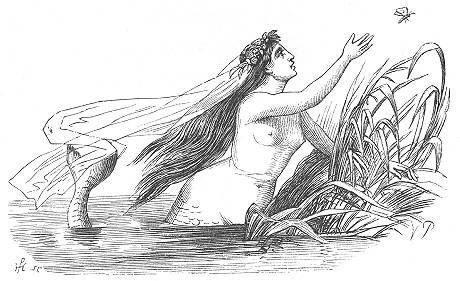
men da kastede hun den langt ud i Bølgerne, de skinnede røde, hvor den faldt "but then she threw it far out into the waves, which shone red where it fell." (literal rendering)2
That is a choice, made with a weapon in her hand and a way home on the table. It is the most active thing anyone does in the story, and it is missing from every retelling.
V
She wanted a soul
The grandmother sets the whole plot in motion long before the prince matters. Mermaids live three hundred years and then become foam, with no grave. Humans are different:
Vi have ingen udødelig Sjæl ... Menneskene derimod have en Sjæl, som lever altid. "We have no immortal soul, no life hereafter. Human beings, on the contrary, have a soul which lives forever, long after their bodies have turned to clay. It rises through thin air, up to the shining stars."2 7
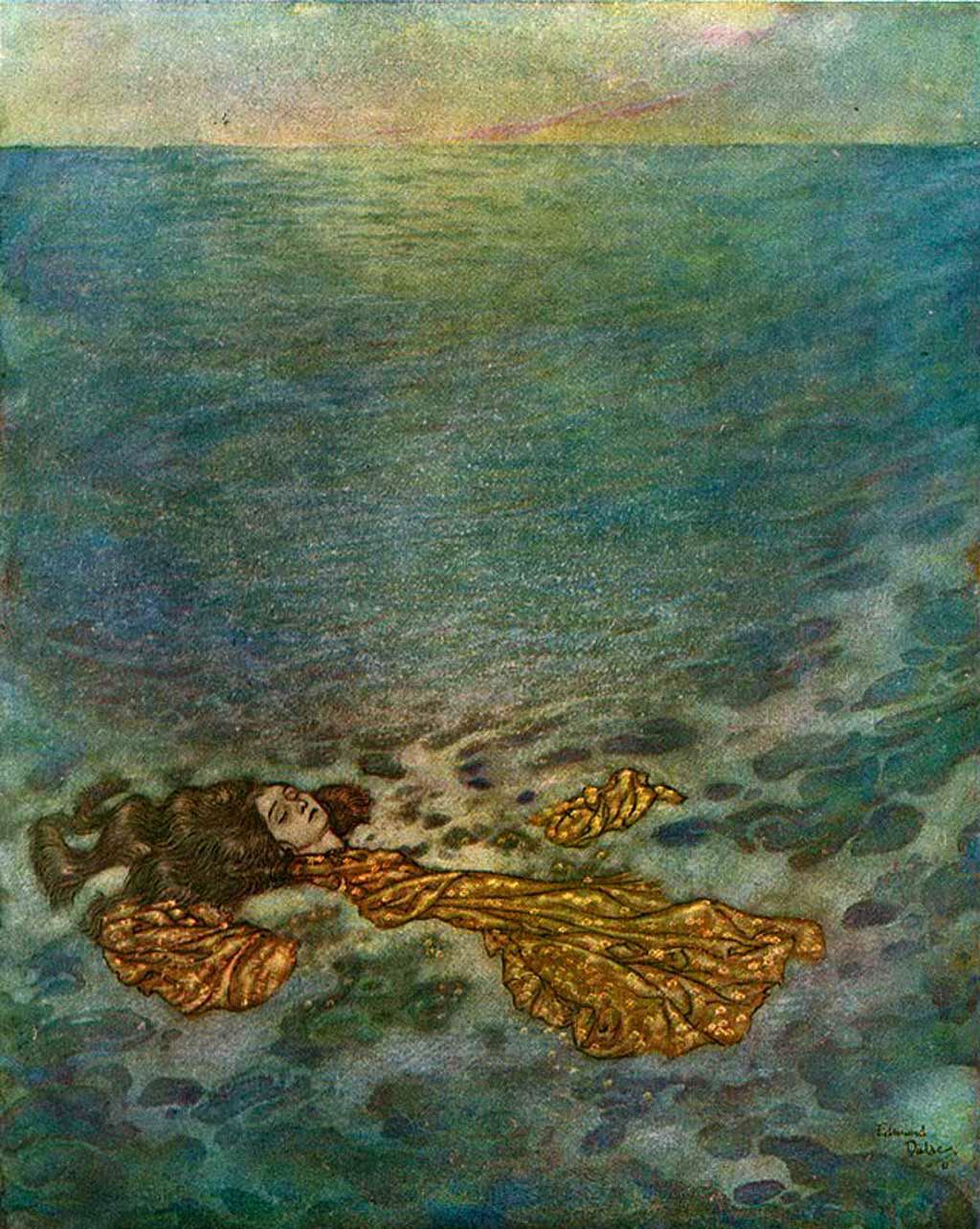
When the witch names the bargain, the text gives the mermaid two objects at once: she says yes "thinking of the prince and of winning an immortal soul."2 After she dissolves, the daughters of the air catch her, and they name the problem in a line that reads like a verdict on the whole plot: af en fremmed Magt afhænger hendes evige Tilværelse, "her eternal life must depend upon a power outside herself."2 8 They tell her she can now make her own soul through three hundred years of good deeds.2 The tale's last speech is the famous coda, in which a good child takes a year off their trial and a naughty child's tear adds a day.2 9 Andersen is often said to have written to the poet B. S. Ingemann about this ending. We could not load the letter, so we do not quote it.
Not cited: Andersen is widely reported to have written to B. S. Ingemann in 1837 about why he changed the Undine ending so that the mermaid's fate would not depend on another being. We tried the H. C. Andersen Centre letter database (andersen.sdu.dk/brevbase) and could not load the letter itself, so no wording from it appears on this page.
Notes
-
"Hans Christian Andersen: Fairy Tales," H. C. Andersen Centre, University of Southern Denmark, register of tales with first-publication dates, listing "The Little Mermaid" as first published 7 April 1837 in Danish, entry 16, in the collection numbered 8, immediately followed by "The Emperor's New Clothes" of the same date, https://andersen.sdu.dk/vaerk/register/eventyr_e.html. The collection page for the tale states that it "udkom første gang i samlingen Eventyr, fortalte for Børn (1837). Det var det tredie af Andersen eventyrhæfter med denne titel," https://andersen.sdu.dk/vaerk/havfrue/index.html?oph=1. ↩
-
H. C. Andersen, "Den lille Havfrue" (1837), Danish text, Wikisource, https://da.wikisource.org/wiki/Den_lille_Havfrue (fetched as wikitext via https://da.wikisource.org/w/index.php?title=Den_lille_Havfrue&action=raw). All Danish quotations in this article come from this text. The passages cited are, in order: the witch's description of the drink and the sharp sword; "hvert Skridt du gjør, er som om du traadte paa en skarp Kniv, saa dit Blod maatte flyde"; "skar Tungen af den lille Havfrue"; "Hvert Skridt hun gjorde ... som om hun traadte paa spidse Syle og skarpe Knive"; "da faaer du ingen udødelig Sjæl! den første Morgen efter at han er gift med en anden, da maa dit Hjerte briste, og du bliver Skum paa Vandet"; "Hun har givet os en Kniv, her er den!"; "men da kastede hun den langt ud i Bølgerne"; "Vi have ingen udødelig Sjæl"; "tænkte paa Prindsen og paa at vinde en udødelig Sjæl"; "af en fremmed Magt afhænger hendes evige Tilværelse"; "Naar vi i tre hundred Aar have stræbt at gjøre det Gode"; and the closing speech about children. A search of this text finds Glas only in "klart, som det reneste Glas," "en stor Glasklokke," "det klare Glas i de høie Vinduer," "Glaskuppelen," "Glasmuren" and the glass walls of the dancing hall, never in the passages about her feet. ↩↩↩↩↩↩↩↩↩↩↩↩↩↩↩
-
Hans Christian Andersen, "The Little Mermaid," trans. Jean Hersholt, H. C. Andersen Centre, University of Southern Denmark, https://andersen.sdu.dk/vaerk/hersholt/TheLittleMermaid_e.html: "But it will hurt; it will feel as if a sharp sword slashed through you" and "every step you take will feel as if you were treading upon knife blades so sharp that blood must flow." ↩↩
-
Andersen, "The Little Mermaid," trans. Hersholt: "And she cut off the tongue of the little mermaid, who now was dumb and could neither sing nor talk," https://andersen.sdu.dk/vaerk/hersholt/TheLittleMermaid_e.html. ↩
-
Andersen, "The Little Mermaid," trans. Hersholt: "If he marries someone else, your heart will break on the very next morning, and you will become foam of the sea," https://andersen.sdu.dk/vaerk/hersholt/TheLittleMermaid_e.html. ↩
-
Andersen, "The Little Mermaid," trans. Hersholt: "She gave us a knife. Here it is. See the sharp blade! Before the sun rises, you must strike it into the Prince's heart," https://andersen.sdu.dk/vaerk/hersholt/TheLittleMermaid_e.html. ↩
-
Andersen, "The Little Mermaid," trans. Hersholt: "We have no immortal soul, no life hereafter ... Human beings, on the contrary, have a soul which lives forever, long after their bodies have turned to clay. It rises through thin air, up to the shining stars," https://andersen.sdu.dk/vaerk/hersholt/TheLittleMermaid_e.html. ↩
-
Andersen, "The Little Mermaid," trans. Hersholt: "A mermaid has no immortal soul, and can never get one unless she wins the love of a human being. Her eternal life must depend upon a power outside herself," https://andersen.sdu.dk/vaerk/hersholt/TheLittleMermaid_e.html. ↩
-
Andersen, "The Little Mermaid," trans. Hersholt: "The child does not know when we float through his room, but when we smile at him in approval one year is taken from our three hundred. But if we see a naughty, mischievous child we must shed tears of sorrow, and each tear adds a day to the time of our trial," https://andersen.sdu.dk/vaerk/hersholt/TheLittleMermaid_e.html. Danish: "da tages et Aar fra de tre hundrede ... hver Taare lægger en Dag til vor Prøvetid" (note 2). ↩
Bibliography
Andersen, H. C. "Den lille Havfrue." 1837. Danish text. Wikisource. https://da.wikisource.org/wiki/Den_lille_Havfrue.
Andersen, Hans Christian. "The Little Mermaid." Translated by Jean Hersholt. H. C. Andersen Centre, University of Southern Denmark. https://andersen.sdu.dk/vaerk/hersholt/TheLittleMermaid_e.html.
H. C. Andersen Centre, University of Southern Denmark. "Den lille Havfrue." https://andersen.sdu.dk/vaerk/havfrue/index.html?oph=1.
H. C. Andersen Centre, University of Southern Denmark. "Hans Christian Andersen: Fairy Tales." Register of tales and first-publication dates. https://andersen.sdu.dk/vaerk/register/eventyr_e.html.
Named but not consulted
H. C. Andersen. Eventyr, fortalte for Børn. Første Samling. Tredie Hefte. Copenhagen: C. A. Reitzel, 1837. The physical first edition. We worked from the digital Danish text and the SDU bibliographic register, not from the 1837 printing itself.
H. P. Paull, translator. Andersen's Fairy Tales. 1872. Project Gutenberg. Named in the brief as an alternative English text; not fetched, because the Hersholt translation at the H. C. Andersen Centre supplied every English passage used here.
H. C. Andersen Centre letter database (brevbase), andersen.sdu.dk/brevbase. The index pages loaded, but the 1837 letter to B. S. Ingemann did not, so nothing from it is quoted.
Image credits
Edmund Dulac, Stories from Hans Andersen, London: Hodder & Stoughton, 1911. Public domain.
Helen Stratton, The Fairy Tales of Hans Christian Andersen, London: Newnes, 1899. Public domain.
Vilhelm Pedersen, illustration to Andersen, before 1859. Public domain.
Edmund Dulac, Stories from Hans Andersen, 1911. Public domain.
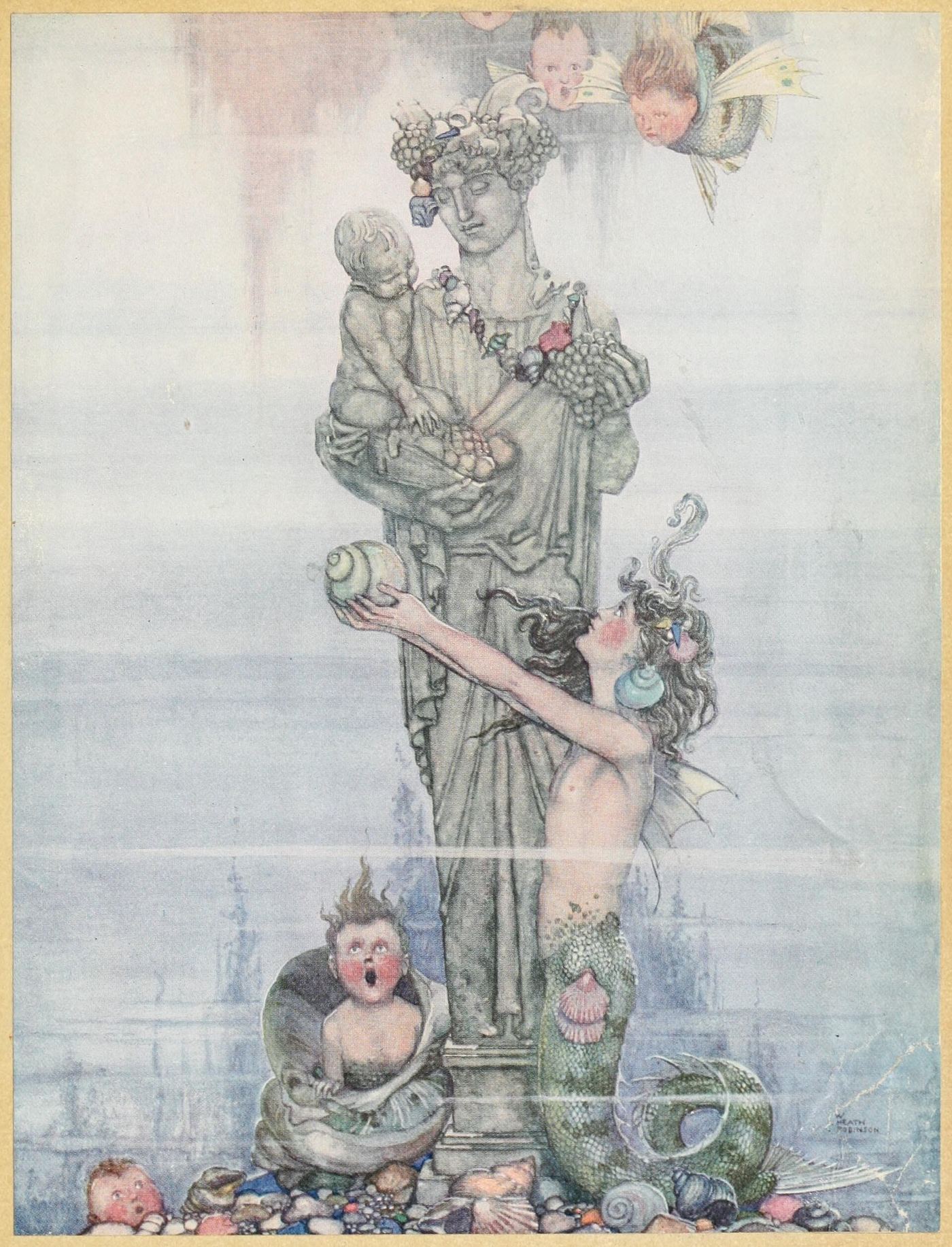
W. Heath Robinson, Hans Andersen's Fairy Tales, London: Constable, 1913. Public domain.